
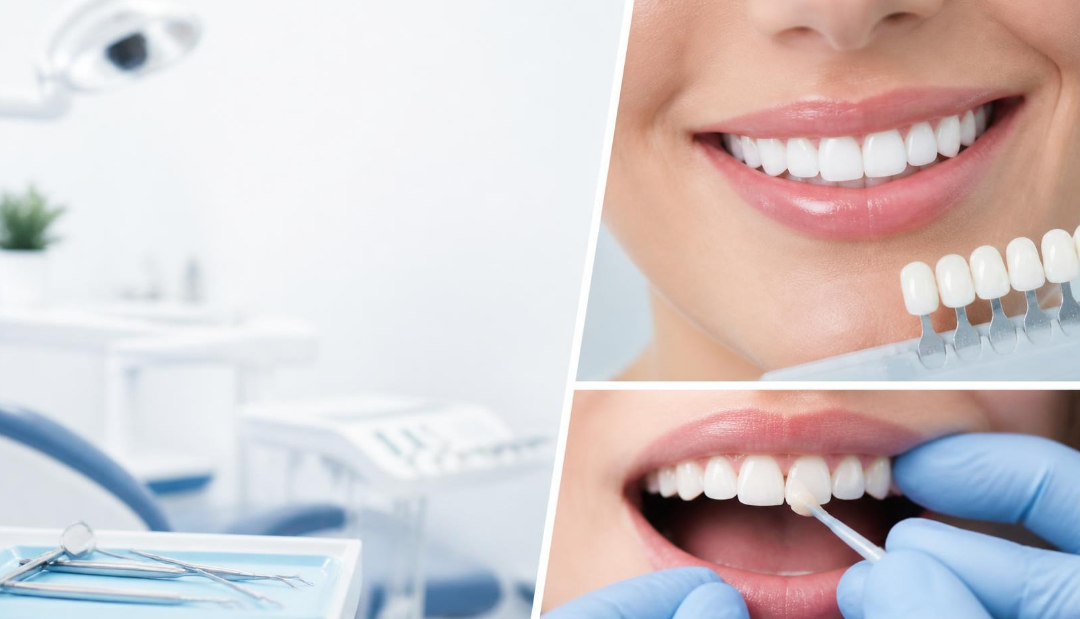
When considering cosmetic dental procedures to enhance your smile, two of the most popular and effective solutions are porcelain veneers and dental bonding (composite bonding). While both treatments can dramatically improve the appearance of chipped, discolored, gapped, or misaligned teeth, they differ significantly in material composition, procedural requirements, durability, and cost.
This comprehensive clinical guide provides a direct comparison to help you determine which treatment aligns best with your aesthetic goals, lifestyle, and budget.
Overview of Options
What Are Porcelain Veneers?
Porcelain veneers are ultra-thin, custom-crafted shells of high-grade dental ceramic that are permanently bonded to the front surface of your teeth. Known for their incredible life-like translucency and stain resistance, veneers are a long-term investment in a complete smile transformation.
What Is Dental Bonding?
Dental bonding involves applying a tooth-colored composite resin directly onto the tooth surface. The dentist sculpts, shapes, and hardens the material using a specialized curing light. It is a conservative, highly accessible solution ideal for targeted minor cosmetic repairs.
Side-by-Side Comparison Matrix
| Feature / Parameter | Porcelain Veneers | Dental Bonding (Composite)
|
|---|---|---|
| Material Composition | High-strength dental porcelain / ceramic | Micro-hybrid or nano-hybrid composite resin |
| Tooth Preparation | Minimal enamel removal (approx. 0.3mm–0.5mm); Irreversible | Minimal to no enamel removal; Generally reversible |
| Longevity / Lifespan | 10 – 15+ Years (with proper care) | 3 – 7 Years (may require periodic touch-ups) |
| Stain Resistance | Exceptionally High (impervious to coffee, tea, wine, and smoke) | Moderate (can discolor over time similarly to natural enamel) |
| Procedure Timeline | 2 to 3 appointments (requires laboratory fabrication) | 1 single appointment (direct chairside application) |
| Durability & Strength | Superior resistance to chipping, fracturing, and wear | Moderate strength; susceptible to chipping under heavy force |
| Repairability | If damaged, typically requires full replacement | Easily repaired or touched up in a single visit |
| Average Cost Profile | Higher initial investment per tooth | Lower initial investment per tooth |
In-Depth Breakdown of Key Factors
1. Material Composition & Esthetics
- Porcelain Veneers: Dental ceramic mimics the natural light-reflecting properties of tooth enamel far better than resin. The subtle translucency of porcelain produces an exceptionally natural, radiant appearance.
- Dental Bonding: Composite resin is carefully color-matched to your surrounding teeth. While visually pleasing and effective for small corrections, it lacks the deep translucency and gloss permanence of porcelain.
2. Tooth Preparation & Invasiveness
- Porcelain Veneers: To ensure the veneer sits flush with your surrounding teeth and doesn’t look bulky, a tiny fraction of enamel (usually less than half a millimeter) must be shaved off. Because enamel does not grow back, veneers are considered an irreversible treatment.
- Dental Bonding: Minimal preparation is needed. The dentist lightly etches the enamel surface to help the bonding agent adhere. In most cases, structure is preserved, making the procedure fully reversible.
3. Longevity & Stain Resistance
- Porcelain Veneers: With proper oral hygiene and regular dental checkups, porcelain veneers routinely last 10 to 15 years or longer. Glass-like ceramic is non-porous, meaning it is impervious to stubborn stains from coffee, red wine, or tobacco.
- Dental Bonding: Composite resin typically lasts between 3 and 7 years. Because resin is slightly porous, it can absorb pigments over time and may require polishing or replacement to maintain its initial shade.
4. Time & Treatment Process
- Porcelain Veneers: The process spans across two or three visits. During the first visit, teeth are prepared and impressions are taken. Temporary veneers are placed while a specialized dental laboratory custom-fabricates your permanent porcelain shells. At the second main visit, the final veneers are precision-fitted and bonded.
- Dental Bonding: Completed in a single visit in under an hour per tooth. The resin is applied directly, molded to shape, hardened with a curing light, and polished immediately.
Pros and Cons Summary
Porcelain Veneers
- Pros: Superior lifespan (10–15+ years), ultra-realistic appearance, stain-proof surface, ideal for full-smile design.
- Cons: Higher upfront cost, irreversible enamel modification, requires multiple visits, cannot be easily repaired if chipped (must be replaced).
Dental Bonding
- Pros: Cost-effective initial investment, single-visit convenience, non-invasive / reversible, easily polished or repaired chairside.
- Cons: Shorter lifespan (3–7 years), prone to staining over time, less durable against heavy biting forces or wear.
Candidate Suitability: Which Is Right for You?
Choose Porcelain Veneers if:
- You want a long-lasting, dramatic smile redesign covering multiple teeth.
- You have severe staining or internal discoloration that does not respond to teeth whitening.
- You desire a stain-resistant finish that maintains its luster for over a decade.
- You are looking to correct moderate misalignments, uneven teeth, or widespread gaps.
Choose Dental Bonding if:
- You need quick repairs for minor chips, cracks, or small gaps.
- You want an economical solution for localized cosmetic enhancements.
- You prefer a non-invasive, conservative approach that preserves natural enamel.
- You need a fast, single-visit cosmetic touch-up prior to an upcoming event.
Schedule a Consultation Today
Every smile is unique, and choosing between porcelain veneers and composite bonding depends on your specific oral health, aesthetic ambitions, and personal timeline. At Aesthetic Dentistry PC, our experienced team provides personalized consultations to assess your teeth and recommend the precise treatment path for your ideal smile.
Ready to transform your smile? Contact Aesthetic Dentistry PC today to schedule your consultation!